

Cambodia is home to five inscribed UNESCO World Heritage Sites, spanning more than a thousand years of history—from the sixth-century brick sanctuaries of the pre-Angkorian Chenla Kingdom and the towering sandstone capitals of the Khmer Empire to modern places of remembrance and peace. Whether you are planning a multi-province heritage itinerary or exploring the kingdom's historical roots, these five landmarks tell the defining story of Cambodian civilization.
1. Angkor Archaeological Park (Inscribed 1992)
Stretching across more than 400 square kilometers in Siem Reap Province, Angkor Archaeological Park preserves the successive capitals of the Khmer Empire from the 9th to the 15th century. At its heart stands Angkor Wat, the world's largest religious monument, celebrated for its lotus-bud towers, expansive moat, and narrative bas-reliefs.
Beyond Angkor Wat, the park encompasses the walled city of Angkor Thom, the enigmatic smiling stone faces of the Bayon, the tree-enveloped galleries of Ta Prohm, and the intricate pink sandstone carvings of Banteay Srei. Just as remarkable is Angkor's vast hydraulic network of reservoirs (barays) and canals, which sustained a thriving medieval metropolis. Visitors require an official Angkor Pass from Angkor Enterprise (US$37 for one day, US$62 for three days, or US$72 for seven days).
2. Temple of Preah Vihear (Inscribed 2008)
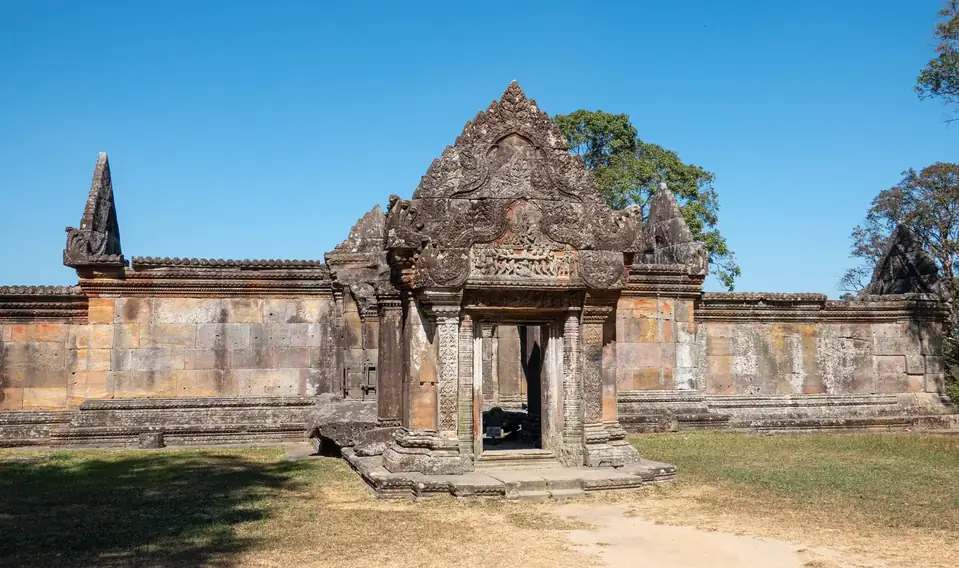
Perched dramatically atop a 525-meter cliff in the Dângrêk Mountains of northern Preah Vihear Province, this 11th-century Hindu sanctuary dedicated to Shiva is one of Southeast Asia's most breathtaking architectural achievements. Unlike most Khmer temples oriented toward the east, Preah Vihear follows an 800-meter north–south processional axis of causeways, staircases, and five richly carved gopuras ascending the escarpment.
Travelers should verify current visitor access with the National Authority for Preah Vihear before planning a trip, as emergency conservation and access restrictions have affected ordinary tourism following 2025 border conflict damage.
3. Temple Zone of Sambor Prei Kuk (Inscribed 2017)
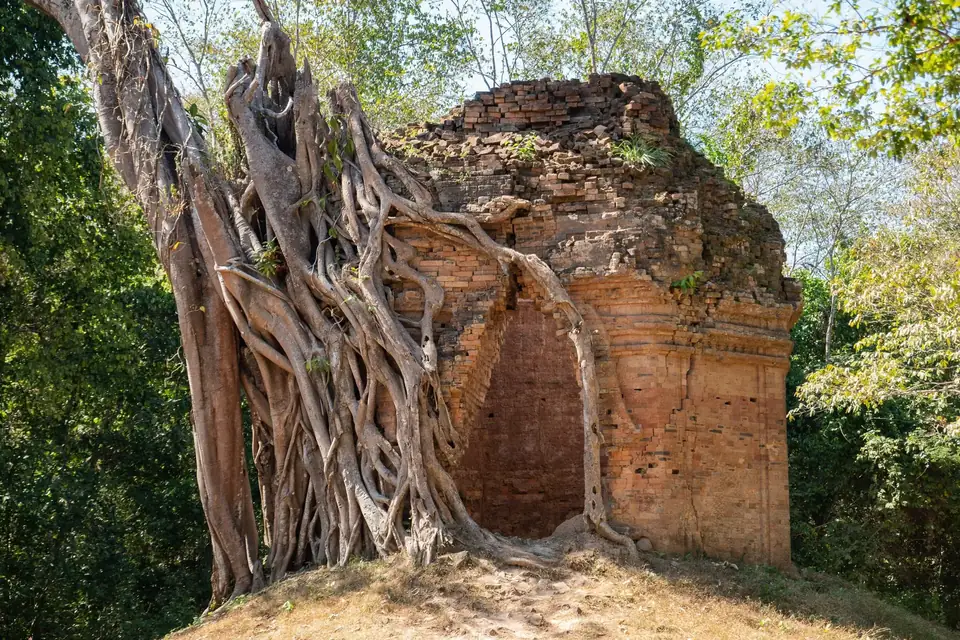
Located in Kampong Thom Province between Phnom Penh and Siem Reap, Sambor Prei Kuk marks the ruins of ancient Ishanapura—capital of the pre-Angkorian Chenla Empire during the late 6th and early 7th centuries. Surrounded by tranquil forest, the archaeological zone contains over 100 brick temples divided primarily into the northern Sambor, central Tao, and southern Yeay Poan groups.
Sambor Prei Kuk is celebrated for its distinctive octagonal brick towers, finely sculpted sandstone lintels, and 'flying palace' reliefs—an architectural language that laid the artistic and religious foundations for the later Angkorian era.
4. Koh Ker: Archaeological Site of Ancient Lingapura (Inscribed 2023)
Roughly 120 kilometers northeast of Siem Reap in Preah Vihear Province, Koh Ker served briefly as the sole capital of the Khmer Empire from 928 to 944 CE under King Jayavarman IV. Known in inscriptions as Lingapura or Chok Gargyar, the sacred landscape integrates dozens of Hindu shrines with the monumental Rahal reservoir.
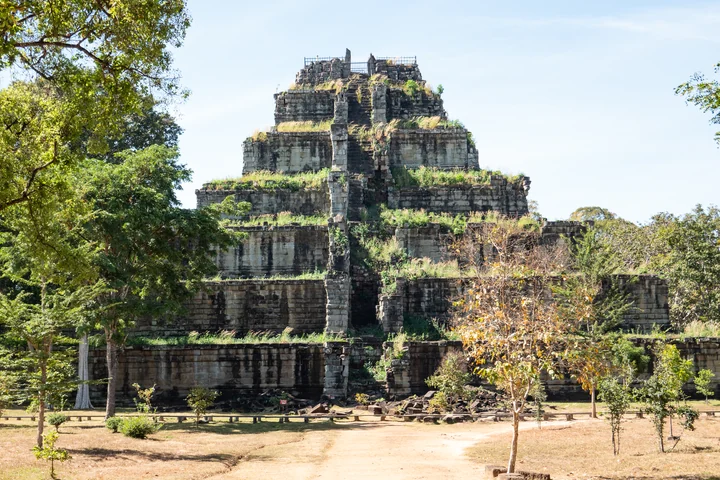
Its centerpiece is Prasat Thom, featuring the Prang—a striking 36-meter-tall, seven-tiered sandstone pyramid rising above the surrounding forest. Koh Ker is also renowned for its dynamic, monumental sculptures and unique architectural style. Entry requires a separate US$15 one-day temple pass from Angkor Enterprise.
5. Cambodian Memorial Sites: From Centres of Repression to Places of Peace and Reflection (Inscribed 2025)
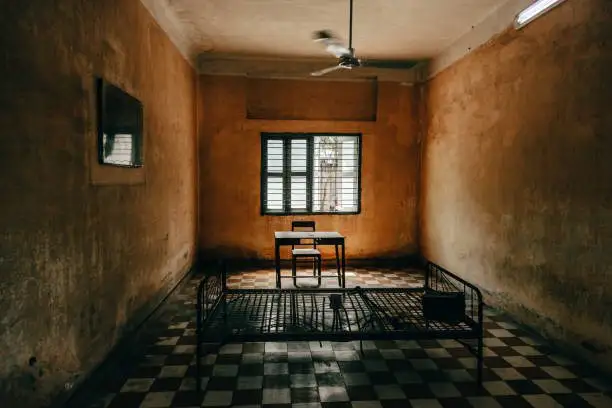
Inscribed in July 2025 as Cambodia's fifth World Heritage property, this serial cultural site honors the victims of the Khmer Rouge regime (1971–1979) while serving as a global center for historical education, human rights reflection, and reconciliation. The listing unites three key locations: the former M-13 Prison (an early detention site in rural Kampong Chhnang/Kampong Speu, not currently open for routine tourism), the Tuol Sleng Genocide Museum (former S-21 interrogation center in Phnom Penh), and the Choeung Ek Genocidal Center (killing fields outside Phnom Penh).
Visiting Tuol Sleng (US$5 international adult entry) and Choeung Ek provides essential context for understanding modern Cambodia. Travelers should approach these memorials quietly and respectfully as spaces of remembrance rather than routine sightseeing stops.
Cambodia's UNESCO Tentative List and Travel Tips
Alongside its five inscribed properties, Cambodia maintains six cultural sites on its UNESCO Tentative List for future nomination: Angkor Borei and Phnom Da (Takéo), Banteay Chhmar (Banteay Meanchey), Beng Mealea (Siem Reap), the Ancient City of Oudong (Kandal), Phnom Kulen / Mahendraparvata (Siem Reap), and Preah Khan Kompong Svay (Preah Vihear).
To experience the inscribed sites comfortably, plan your visit during the drier months from November to February, dress modestly with shoulders and knees covered at temples and memorials, carry small US dollar and Cambodian riel cash for rural tickets, and always stay on marked paths to protect fragile masonry.
Questions before you go
How many UNESCO World Heritage Sites are in Cambodia?
Cambodia has five inscribed UNESCO World Heritage Sites: Angkor Archaeological Park (1992), Temple of Preah Vihear (2008), Temple Zone of Sambor Prei Kuk (2017), Koh Ker Archaeological Site (2023), and Cambodian Memorial Sites: From Centres of Repression to Places of Peace and Reflection (2025). All five are cultural properties.
Do you need separate tickets for Cambodia's UNESCO World Heritage Sites?
Yes. Angkor Archaeological Park requires an Angkor Pass from Angkor Enterprise (US$37 for 1 day, US$62 for 3 days, or US$72 for 7 days). Koh Ker requires a separate US$15 one-day pass, while Tuol Sleng Genocide Museum (S-21) charges US$5 for international adults. Always check current official access for Preah Vihear before traveling.
What is the best time of year to visit Cambodia's UNESCO sites?
The cooler, drier months from November to February offer the most comfortable weather for exploring outdoor temple complexes like Angkor, Sambor Prei Kuk, and Koh Ker. Early mornings and late afternoons provide softer light and cooler temperatures year-round.
Which sites are on Cambodia's UNESCO Tentative List?
Cambodia has six cultural sites on its official UNESCO Tentative List: Angkor Borei and Phnom Da, Banteay Chhmar, Beng Mealea Temple, the Ancient City of Oudong, Phnom Kulen (Mahendraparvata), and Preah Khan Kompong Svay.
Sources & further reading
- UNESCO World Heritage Centre — Cambodia State Party Page
- Ministry of Culture and Fine Arts Cambodia — UNESCO World Heritage
- Angkor Enterprise — Official Temple Passes
Compiled from official UNESCO World Heritage Centre inscriptions, Cambodia Ministry of Culture and Fine Arts records, and Visit Cambodia destination reviews.