
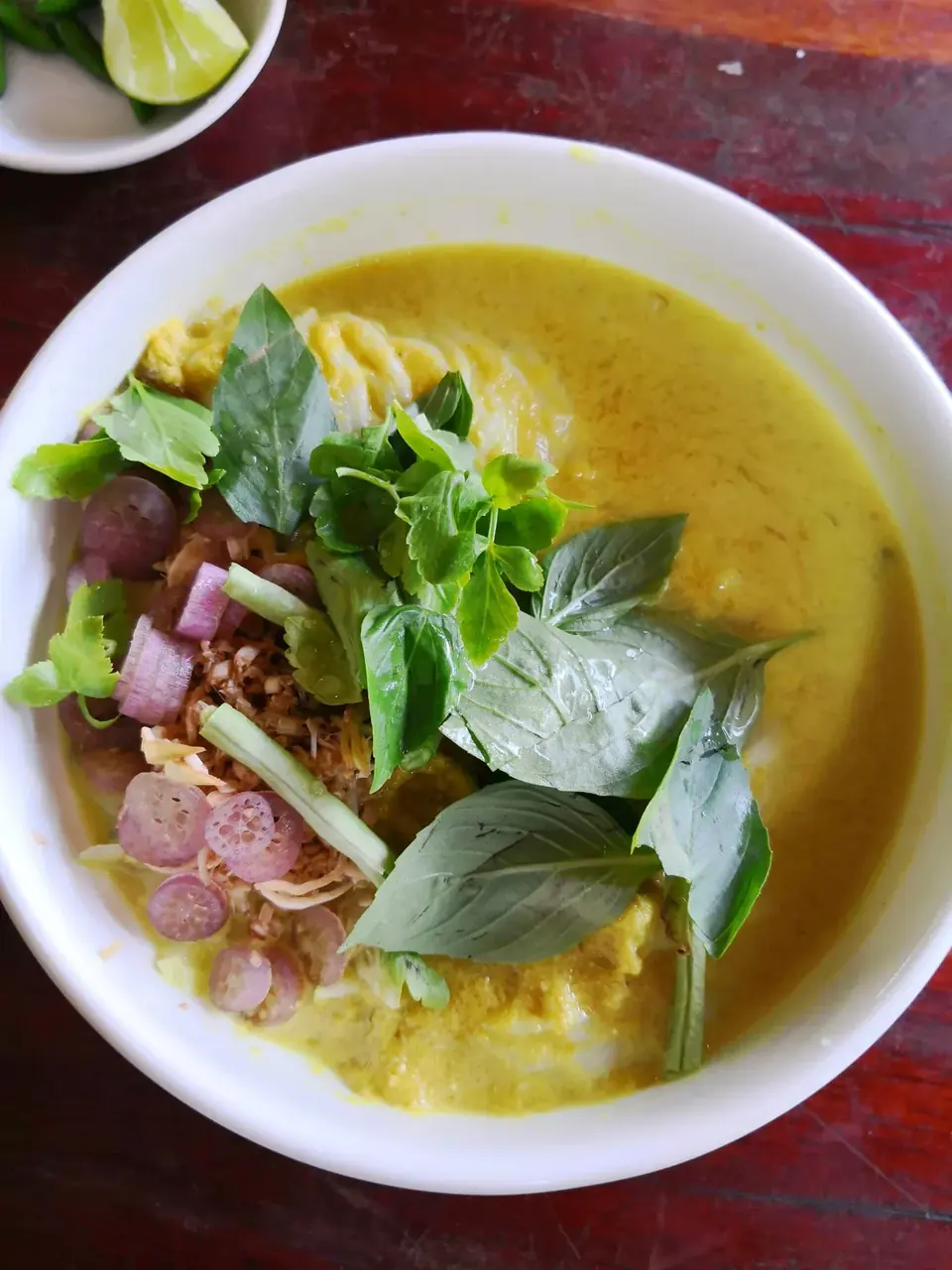
Fish Amok is the indisputable crown jewel of Cambodian cuisine. With its silky, souffle-like texture, rich coconut cream custard, and vibrant yellow curry paste, this royal banquet dish captures centuries of culinary refinement distilled into an exquisite folded banana-leaf parcel.
Royal Heritage and the Tonle Sap Fishery
While everyday Cambodian cooking centers on fresh soups (samlor) and fermented fish (prahok), Amok represents the pinnacle of royal banquet gastronomy. Its foundation relies directly on the ecological abundance of the Tonle Sap—Southeast Asia’s largest freshwater lake—which provides fresh snakehead (trey ros) or catfish.
In palace kitchens, court cooks refined the technique of gently steaming delicate fillets within woven banana leaf cups (kratong), transforming humble freshwater fish into an airy, aromatic mousse fit for sovereigns and visiting dignitaries.
The Magic of Yellow Kroeung and Sluk Ngor
The distinct flavor architecture of Fish Amok begins with kroeung, the quintessential Khmer spice and herb paste. Pounded meticulously in a stone mortar, fresh lemongrass stalks, fresh turmeric root, galangal, kaffir lime zest, shallots, garlic, and dried red chilies produce a fragrant, golden-hued base.
The curry paste is whisked with rich coconut milk, fresh duck eggs, and fish sauce into a velvety emulsion. Crucially, traditional amok is lined at the bottom of the banana-leaf basket with sluk ngor (wild noni leaves), whose gentle, pleasant bitterness cuts through the richness of the coconut cream and aids digestion.
Steaming Technique: Souffle vs. Stir-Fry
Authentic Cambodian amok is strictly steamed, never stir-fried in a wok. As the banana-leaf baskets steam over simmering water, the egg and coconut cream set gently into a delicate, custardy curdle that melts on the tongue.
Before serving, the dish is crowned with a swirl of unsweetened coconut cream and paper-thin chiffonade slivers of fresh kaffir lime leaves and mild red spur chilies. Paired with steaming jasmine rice, it showcases the balance of aromatic herbs over intense chili heat.
Finding Authentic Amok Across Cambodia
While nearly every tourist-facing restaurant across Phnom Penh and Siem Reap lists 'Amok' on the menu, many serve a quick-stirred yellow curry soup. Discerning travelers should seek out restaurants and culinary schools that prepare the traditional steamed version (Amok Trey).
Look for banana-leaf cups that hold their structure and require 20 to 30 minutes of steaming to order. Taking a local cooking class in Siem Reap or Battambang offers an unforgettable hands-on opportunity to pound raw kroeung and fold your own kratong baskets.
出发前的疑问
What are the essential traditional ingredients in Fish Amok?
Traditional fish amok relies on freshwater fish like snakehead or catfish from the Tonle Sap lake, combined with yellow kroeung, thick coconut cream, egg, fish sauce, and noni leaves (sluk ngor).
Is Fish Amok spicy?
Unlike fiery Thai curries, traditional Khmer amok emphasizes fragrance and balance—lemongrass, kaffir lime leaf, turmeric, and galangal provide aromatic warmth rather than spicy heat.
资料来源与延伸阅读
Researched and compiled with verified national culinary heritage archives and chef masterclasses.