
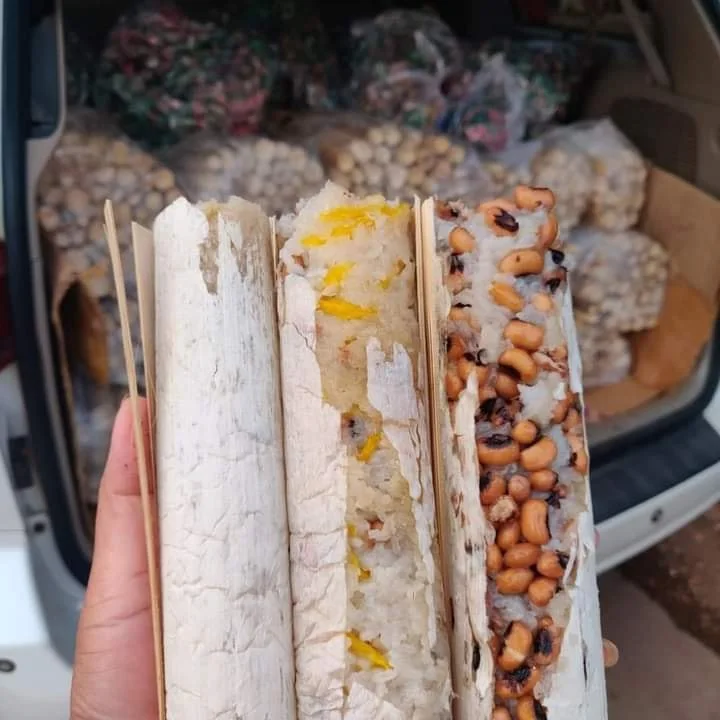
Kralan is one of Cambodia's most beloved rural travel snacks. Packed into wild bamboo sections and slow-roasted over smoldering coals, this fragrant cylinder of sticky rice, coconut milk, and beans offers travelers a warm, slightly smoky taste of countryside heritage.
Ancient Origins and Natural Cookware
Centuries before modern cookware, travelers, hunters, and monks throughout Southeast Asia turned to nature to prepare portable provisions. In Cambodia, wild bamboo stalks (bóng pech) served as natural, heat-resistant pressure vessels for cooking rice on long journeys.
The inner lining of the young bamboo cane produces a delicate, paper-thin membrane (somphoch) that adheres to the cooked rice as it steams, keeping the cylinder intact, preserving moisture, and infusing the grains with a distinctive woody aroma.
Ingredients and Charcoal Pit Roasting
Preparing authentic kralan begins with premium glutinous rice soaked until plump. The grains are tossed with rich freshly squeezed coconut cream, grated coconut flesh, black or red beans, a pinch of sea salt, and a hint of fragrant palm sugar.
The mixture is poured into hollow bamboo tubes, capped tightly with coconut husks or rolled banana leaves, and arranged in long rows over a shallow trench of slow-burning charcoal or rice husks. Over several hours of gentle rotating and tending, the rice slowly steams in its own sweet coconut juices while the outer bamboo chars.
Regional Capitals: Thma Koul and Kratie
While kralan can be found roadside across the country, certain regions are celebrated as masters of the craft. Thma Koul district in Battambang province and the riverfront communities of Kratie province (particularly near Sambor) are famous destinations for travelers seeking exceptional kralan.
Roadside stands line National Road 5 and river highways, with billows of aromatic smoke guiding drivers to rows of freshly roasted bamboo stacks bundled in groups of five or ten.
How to Enjoy Kralan on the Road
Vendors use sharp cleavers to shave away the charred outer bamboo bark before handing the sticks to customers, leaving a smooth, paper-thin white bamboo skin. To eat, gently pull down strips of the bamboo husk like peeling an ear of corn.
Kralan is best enjoyed warm or at room temperature on the day of purchase, making it an ideal companion for long road trips, pagoda picnics during Khmer New Year, or an afternoon snack between temple visits.
Questions before you go
What ingredients are inside a stick of Kralan?
Kralan consists of fragrant glutinous (sticky) rice mixed with rich coconut milk, grated coconut flesh, palm sugar, a touch of salt, and black beans or red beans, packed into bamboo canes.
How do you peel and eat Kralan?
Kralan sticks are scored lengthwise before sale; simply peel down the thin bamboo fibers like peeling a banana to reveal the tender, smoky roasted rice core inside.
Sources & further reading
- Ministry of Tourism Cambodia — Food and Provincial Specialties
- Cambodian Heritage Crafts and Culinary Documentation
Researched and compiled with verified regional culinary guides and provincial craft heritage records.