
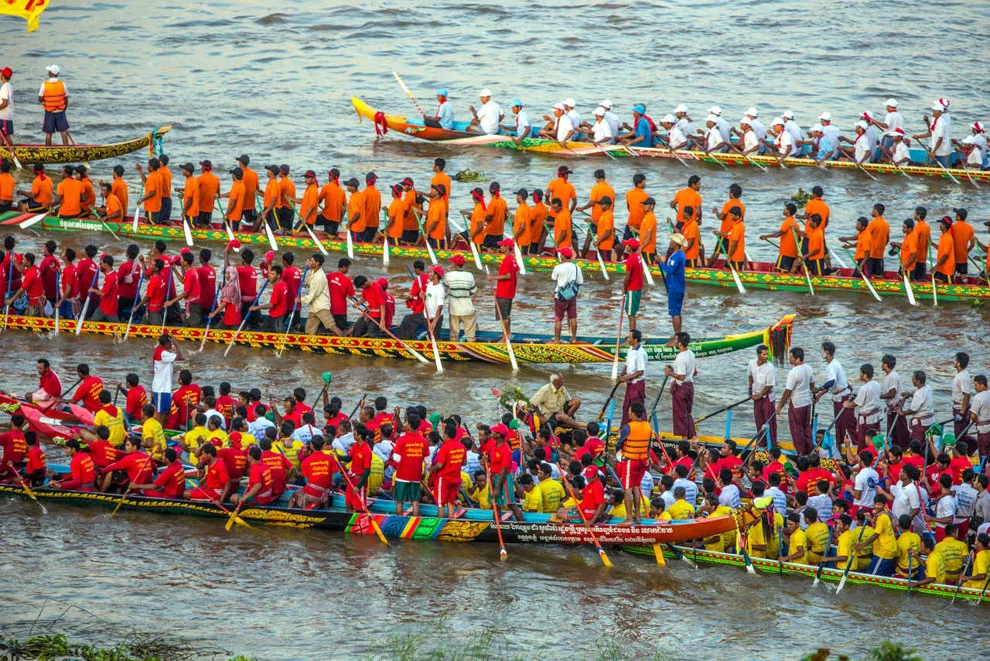
Every year at the end of the monsoon season, millions gather along Cambodia’s riverbanks to celebrate Bon Om Touk—the Cambodian Water Festival. Far more than a spectacle of thrilling boat races and glowing river floats, this three-day national celebration honors a rare hydrological miracle, pays tribute to ancient Angkorian naval victories, and expresses deep gratitude to nature for sustaining life across the kingdom.
The Reversal of the Tonlé Sap River
At the heart of Bon Om Touk is one of the world’s most extraordinary natural phenomena. During the rainy season from June to October, heavy monsoon rains swell the mighty Mekong River, forcing water upstream into the Tonlé Sap River and expanding the Tonlé Sap Lake to nearly five times its dry-season size.
作者:November, as the rains subside and Mekong water levels drop, the Tonlé Sap River reverses course and begins flowing back toward the sea. This dramatic shift deposits nutrient-rich silt across the central floodplains and triggers one of the richest freshwater fish migrations on Earth—the lifeblood of Cambodian agriculture and cuisine.
Honoring the Ancient Angkorian Navy
Beyond its agricultural significance, Bon Om Touk commemorates the naval strength of the Khmer Empire during the 12th century under King Jayavarman VII. Stone bas-reliefs carved into the walls of the Bayon and Banteay Chhmar temples depict rows of muscular oarsmen propelling long war canoes across the Tonlé Sap Lake in decisive naval battles.
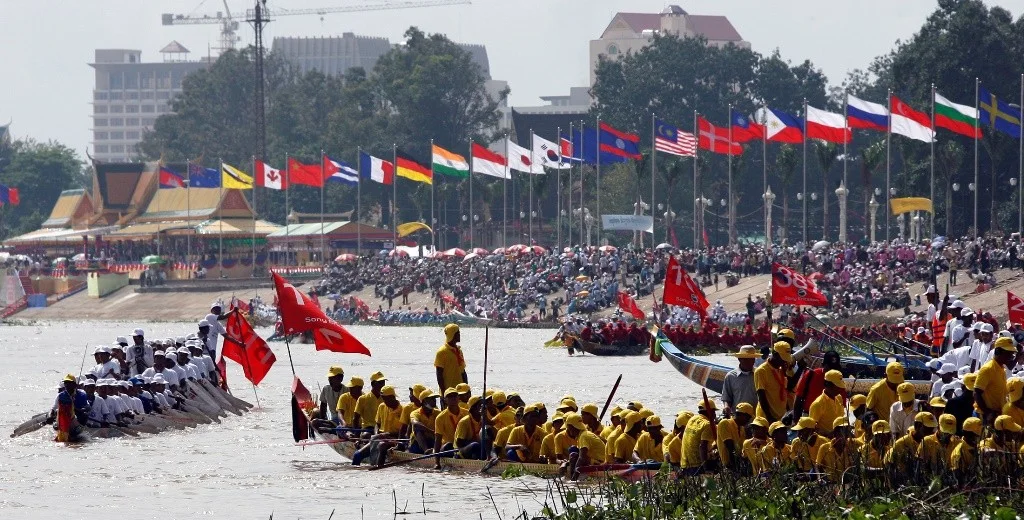
Today’s colorful boat races—featuring sleek, hand-carved wooden racing boats (Tuk Ngo) crewed by up to 70 synchronized paddlers—keep that ancestral maritime spirit alive, turning historical military training into peaceful community pride and friendly provincial competition.
Gratitude to Water Deities and Earth Spirits
In traditional Khmer culture, rice and fish are inseparable from spiritual reverence. Bon Om Touk serves as an annual thanksgiving ceremony to Preah Mae Kongkea (the Goddess of Water) and Preah Thorani (the Earth Goddess), asking forgiveness for any pollution or disturbance caused to rivers during the year and praying for balanced rainfall in the next planting cycle.
Families and pagodas across the countryside construct decorative rafts laden with incense, candles, fruit, and flowers, releasing them onto rivers and canals to carry away misfortune and honor the waterways that nourish their communities.
Day 1: The Opening and Blessing of the Waters
Spanning three days across the full moon of the Buddhist month of Kadeuk, Bon Om Touk begins with dawn blessings along riverbanks and village pagodas. Monks and elders chant over the long racing boats (Tuk Ngo), which are adorned with colorful flags, sacred cloth, and carved prows depicting Nagas (mythical serpents) or fierce Makaras to ward off danger.
In the afternoon, crews representing provinces nationwide race in pairs along the river to the rhythmic beat of gongs and whistles. As night falls, Loy Pratip begins—massive illuminated floats sponsored by the Royal Palace and ministries glide past the riverfront, showcasing vibrant light displays of Cambodian landmarks, agricultural abundance, and cultural heritage.
Day 2: The Full Moon, Sampeah Preah Khe, and Ak Ambok
The second day marks the spiritual climax of the festival, coinciding with the brightest full moon of the year and the peak reversal of the Tonlé Sap River. Following intense afternoon elimination heats on the water, families and pagoda congregations gather beneath the midnight moon for Sampeah Preah Khe—offering incense, candles, fruit, flowers, and young coconuts while clasping their hands in the Sampeah gesture to pray for a bountiful harvest.
Immediately afterward, everyone shares Ak Ambok: newly harvested glutinous rice roasted in its husk, pounded flat with a wooden mortar and pestle, and mixed with ripe banana slices and fresh coconut milk. Sharing Ambok symbolizes community unity and gratitude for the year’s first grain harvest.
Day 3: The Finals and Cutting the Rope (Kat Proat)
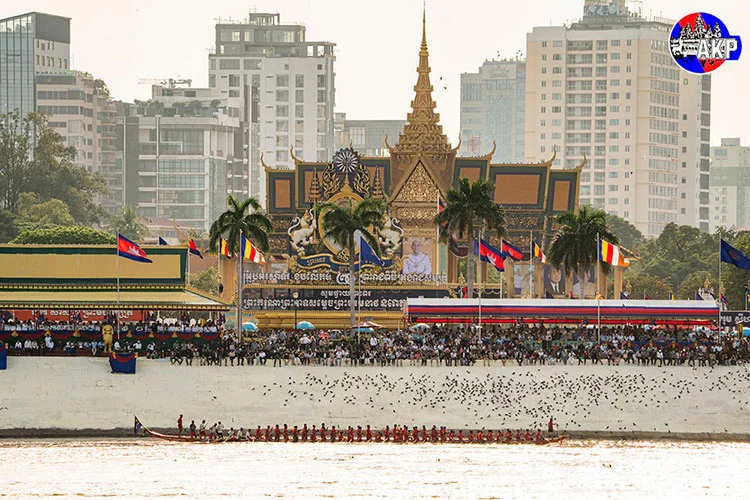
On the final afternoon, the fastest crews compete in championship heats before the Royal Palace pavilion to claim provincial pride and victory banners. At dusk, a sacred ritual known as Kat Proat takes place on the water: a ceremonial rope stretched across the river—symbolizing the holding back of monsoon floodwaters—is ritually severed to signify releasing the waters safely back toward the sea so rice paddies can dry for the main harvest.
The celebration concludes with a final parade of Loy Pratip illuminated boats and fireworks over the confluence of the Mekong, Tonlé Sap, and Bassac rivers, sending paddlers and visitors home with blessings for the dry season ahead.
出发前的疑问
Why does Cambodia celebrate the Water Festival (Bon Om Touk)?
Bon Om Touk marks the end of the rainy season and the unique natural reversal of the Tonlé Sap River, thanking water deities for fertile rice fields and abundant fish while honoring the ancient Angkorian navy.
What are the main traditional ceremonies during Bon Om Touk?
Three core rituals define the festival: Loy Pratip (illuminated boat parades), Sampeah Preah Khe (saluting the full moon), and Ak Ambok (midnight eating of flattened rice with banana and coconut).
资料来源与延伸阅读
- Ministry of Culture and Fine Arts Cambodia — Traditional Festivals
- Ministry of Tourism Cambodia — Bon Om Touk Water Festival
Compiled from verified Cambodian cultural records, historical chronicles of the Angkorian Empire, and Ministry of Culture and Fine Arts references.